

The Story of Plastic Water
The Story of Plastic Water comes from being asked to photograph a pictorial paradigm,
an image of what it is.
The story of Plastic Water comes from being asked to photograph paradigm, An image of what it is, which is a simple yet deceptively complex description for a pondering mind. Firstly, I looked up the definition, it said:
`A typical example or pattern of something; a pattern or model. `society`s paradigm of the `ideal women”. From this `something of what it is`
Further Googling brought me to some contemporary examples including; Andreas Gursky in his 99 cents (which set a world record at auction ($2.3 million, 2006)), which helped to secure photography`s place amongst the old masters in the art world. Other works include Parliament 1998, Bahrain 1 2005, Chicago board of trade 2 1999, which are large format digitally altered images, in the abstract image there is no perspective (similar to Hockney`s joiners) across the scene, Hiroshi Sugimoto in his dioramas (these include; theatres, Seascapes, Drive-in theatres, and architectural imagery) Thomas Ruff who turned blurred porn images into large scale prints in the gallery.
And…
http://www.artnet.com/artists/Thomas-Ruff/
It was at this point I encountered Thomas Ruff`s Substrate series and found the abstraction fascinating and wanted to make some of my own. After more research, I found this might be hard to do, as the equipment is hard to source for my own attempts. Other artists looked at were: Thomas Demand, who made and photographed paper models and rooms, Andreas Serrano, Wolfgang Tillman, Jeff Koons, Thomas Struth And Phillip Lorca diCorcia, Robert Mapplethorpe through to Beat Streuli`s `back of the bus’ series, all of whom have produced pictorial paradigms. This research and imagery sparked a memory about some experimentation in capturing a metal scrubber and a plastic bottle.
The Metal Scrubber and the Plastic Bottle Experiment.
The initial thought experiment for this is as follows; how is it possible to capture pure light without a subject? The result with; lots of light is a white sensor or negative, and a black or dark one in reverse. Therefore some form or shape must diffract, absorb, and reflect or radiate the light to create a disturbance and allowing the capture of the event. All photographs contain light, it cannot be anything else captured but, the sensor or negative being a light sensitive medium. The differentiation is in the mechanical means and format of capture. The aesthetics, function and form of contents, come from the photographer and their reasoning for capture, as well as the amount of light hitting the sensor, where the highest and lowest tones rest in the exposure of the scene.
This then lead to the thought of how can I capture light, with the taking or capture using a camera, of the event itself. I had become fascinated with sunlight streaming through different bottles of water and diffracting onto the surface of the kitchen table, with the prism of the light coming from different brands of bottles, changing the design and type of plastic used. The physics slit experiment shows `When light waves meet a gap in a barrier, they carry on through the gap. However, the light waves spread out to some extent into the area beyond the gap. This is diffraction. The extent of the spreading depends on how the width of the gap compares to the wavelength of the waves’. Taken from;
Different plastic bottles giving different internal and external refraction prisms (Sound waves and light waves change speed when they pass across the boundary between two substances with different densities, such as air and glass. This causes them to change direction and this effect is called refraction, taken from:
Sometimes the light on the table looked like reflected water (similar to my experiment of trying to capture a white sheet of paper on a white background under a shower of water for my interpretation brief in the second year of university).
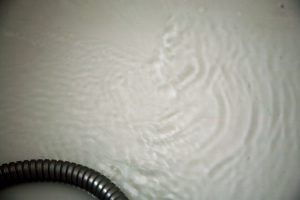
This is what was happening with the plastic bottles on the dining table. But what if I over exposed the image slightly to remove the plastic out of the image and just leave the radiated light coming from within the various thicknesses of bottles? Would it even work and would it look like the texture of light.
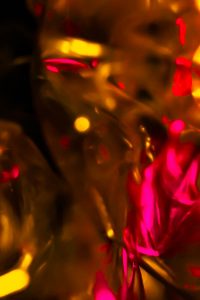
I then set about capturing a series of images. Using a flashgun under a Perspex sheet and under lighting. Then using another flash unit coming in at various tangents to the underneath key light. Experimenting with coloured gels and power settings. A brief selection of the images are below showing the Progression of this original pan scrubber and bottle practice shoot experiment.
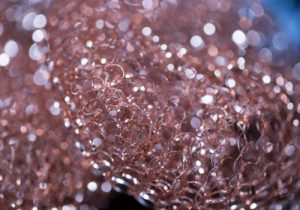
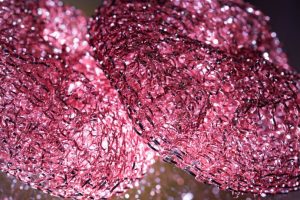
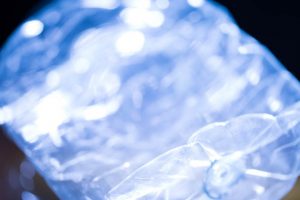
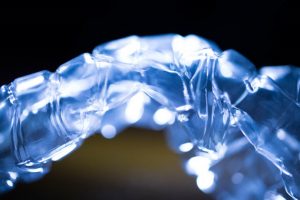
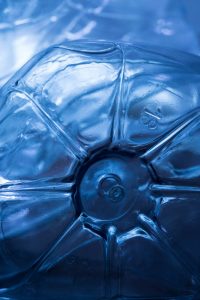
The flash point in seeing the plastic as water, was this image below it reminded me of walking around an indoor swimming pool as a child, with the windows reflected in the water’s surface. After this I knew it had potential, it was just the `what for and when’ to use it. I then removed it out my head until at some point it would come back, with usage in the future.
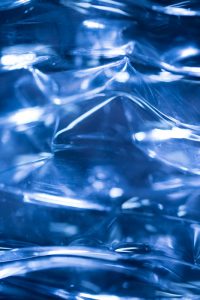
Plastic Water Shoot One
All of the above came to mind during a report on the state of the oceans by Sky News Channel. They have started to highlight how much plastic is in the world`s oceans and is expected to have increased fivefold in the next ten years. Thinking if it gets that bad we will be able to almost walk on Plastic Water.
I remembered camping on some cliff tops and watching the sun setting in the glistening crests of the incoming tide, (in a similar scene to one that was shown above) and wishing I could walk along it again.
From the initial Pan Scrubber and Plastic Bottle experiment, I had collected a dustbin liner of various plastic bottles, which I now had a use for. This would then fit the parameters of a pictorial paradigm. It would be a picture of itself. I set up the studio and arranged a C section table with a Perspex top, under this I placed a wireless flash. I then set up another flash at right angles and flagged it off with the camera pointing across the subject with hooded lens for flare control. I played around with colored gels and flash power, positioning, and angling of the different coloured lights over the subject matter. The subject matter was a pile of plastic bottles with air squeezed out of them (some twisted in order to diffract and reflect the light differently), and with a tripod mounted canon 5d mk3 camera live shooting into a laptop, a 100mm macro lens, also set up but not used was a 300D fitted with a 60mm macro lens (to experiment with further.) which would allow a different macro viewpoint.
I would then be able to see what these look like (what will they look like, with light flashed through them this time?). I have tried capturing images of dust particles in a sunbeam handheld with a macro lens, balancing on a mattress. (A very small hit rate, but some very interesting results).
I also thought of pieces of shaped paper making the image from casting shadows without a clear source (selective focusing should eliminate the paper and leave only the shadows in the image).
I was not happy with the initial results after the initial jubilation of the capture of so many interesting abstract images, decided to learn how to develop them better and comparing them To Ruff`s Substrate series.
With the plastic oceans in mind, I tried to get some light bleed into the images, for further experimentation in different end results. Would there any similarities between the light bleed in the smoke imagery, against sunlight streaming through the upper layers of the ocean and prism down.
From Friends walls to the gallery and Back again
I edited and developed the images and then had all of the images printed at A2 and framed I then coerced friends to hang a rotating selection on their walls to give a wide range of authorship through various viewpoints and favorites and not so favorites from the images, in differing and variously lit walls, in both natural and artificial light. As an artist, I apparently am never happy, because perfection cannot be reached or attained. However, I can at a later time period re-edit my images, with developed software and experience and examine how the second edit compares to the first and has it been developed more toward that initial intention.
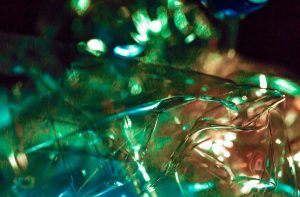
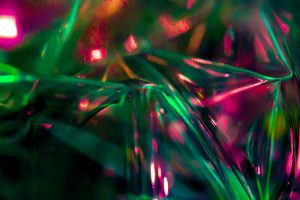
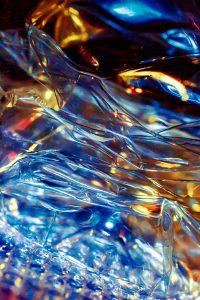
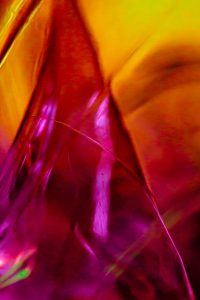
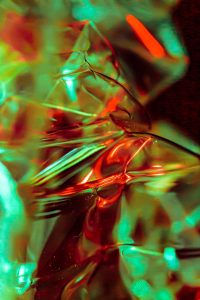
Having had the prints on various friends’ and my own walls for over a year and a rolling exhibition at Bean and Nothingness, watching how different views come and go through the day with the different lighting and by changing around the images each had, I could solicit a variety of opinions about favourites and any dislikes of the concept. I already knew they were as good as I could have got at the time, with its constraints. However the images were not what I initially imagined. So, I decided to have another play around with developing the original digital negatives and start from scratch after not viewing the old images for a couple of months to clear my head of doing anything similar except the basic workflow of editing. Lightroom had also gone through numerous upgrades and it would be interesting to see the differences in finished edits for that reasoning alone. Here are a series of collections from the second editing. I am far happier with the latest development, Through the colour of leaves project I found the confidence to Push the editing on the images a bit further and to not be afraid of how saturated and in your face they may appear to be as they are a lot nearer to my pre-visualisation and thoughts when starting out in this endeavour. I have grouped the images into portrait and landscape and then into four collections of each orientation. I have omitted a lot of images, however while some of these may be similar, they all have their own merit for inclusion into the Plastic Water Collection.
The plastic bottles have been recycled again by giving them to an artist who is running children’s art workshops, after use (small children painting them and turning them into spiral mobiles) I will get them back and photograph them again painted, and further recycle them again.


Recent Posts
Archives
Categories
- COMMISSIONS
- COMMISSIONS GALLERIES
- Events & Performance
- Fishing Masham Galleries
- Fishing the Ure at Masham
- GALLERIES
- Patrick Maunder
- Perambulations
- PLASTIC WATER
- PLASTIC WATER GALLERIES
- Ponderings
- PROJECTS
- PROJECTS GALLERIES
- Raphael Dadda
- Ronnie Soak
- SELECTED GALLERY
- SERVICES
- SHOP
- Studio & Portraits
- The Three Crown Kid
- Walkabout Galleries